In the Welcomin system, each Workflow is made up of steps — individual activities or content items that guide the user through the process.
These steps may include filling out forms, viewing multimedia content, reviewing documents, and signing them digitally or with a scanned signature.
Configuring Step Content is essential to tailor workflows to your company’s specific needs.
By navigating to Settings > Workflows > Structure> Steptempaltes, you can define which information to collect and which documents to display for viewing or signing.
In this screen you can view the list of steps created to date:
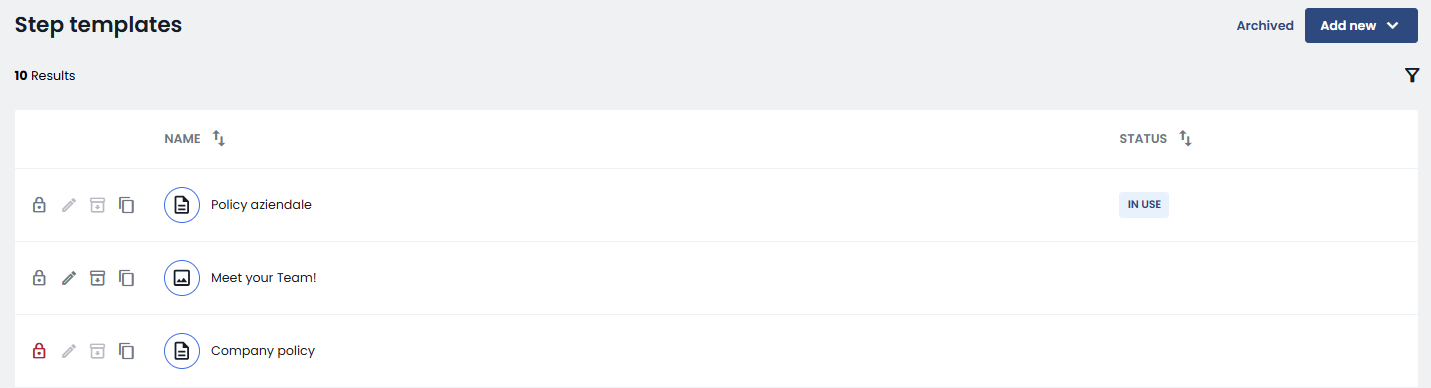
On the left there are icons that allow you to perform the different actions on the step template.
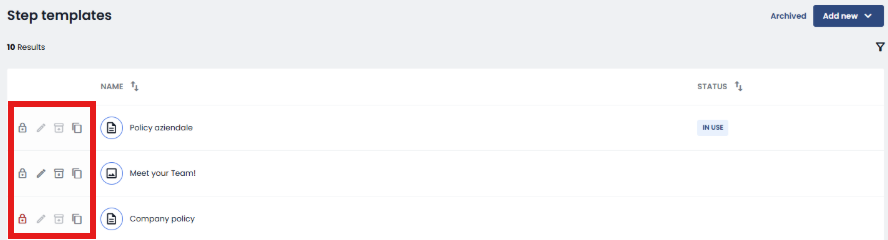
The icon allows you to lock the change, preventing users who do not have the necessary permissions in their role from making changes; when this limitation is active, the icon is displayed in red

By clicking on the icon  you can access the editing of the template, while by selecting the icon
 you can archive the step. Finally, through the icon
 , it is possible to duplicate the step template to create a copy.
In the next column we will find an icon that identifies the type of step template and the name.
This column can be used to sort the display of the Steps, making it easier to manage and organize the workflow.
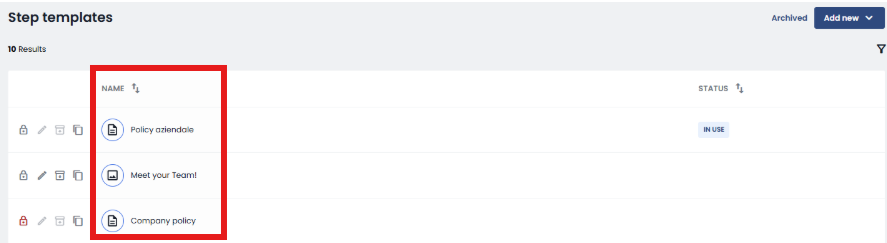
The types of Steps can be:
-
 Contents
 Form
 Profile Form
 Document to view
 Document to be signed
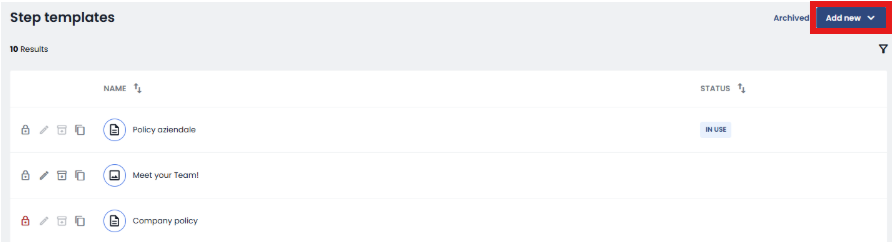
To create a new Workflow Step, simply click on Add Step in the top right corner and select the type of Workflow Step you want to create:
- Form: In the first tab - Overview - you will need to specify the title and internal description, which will remain invisible to the person. Next, the title of the step and its description will be defined, which will instead be shown to the person.
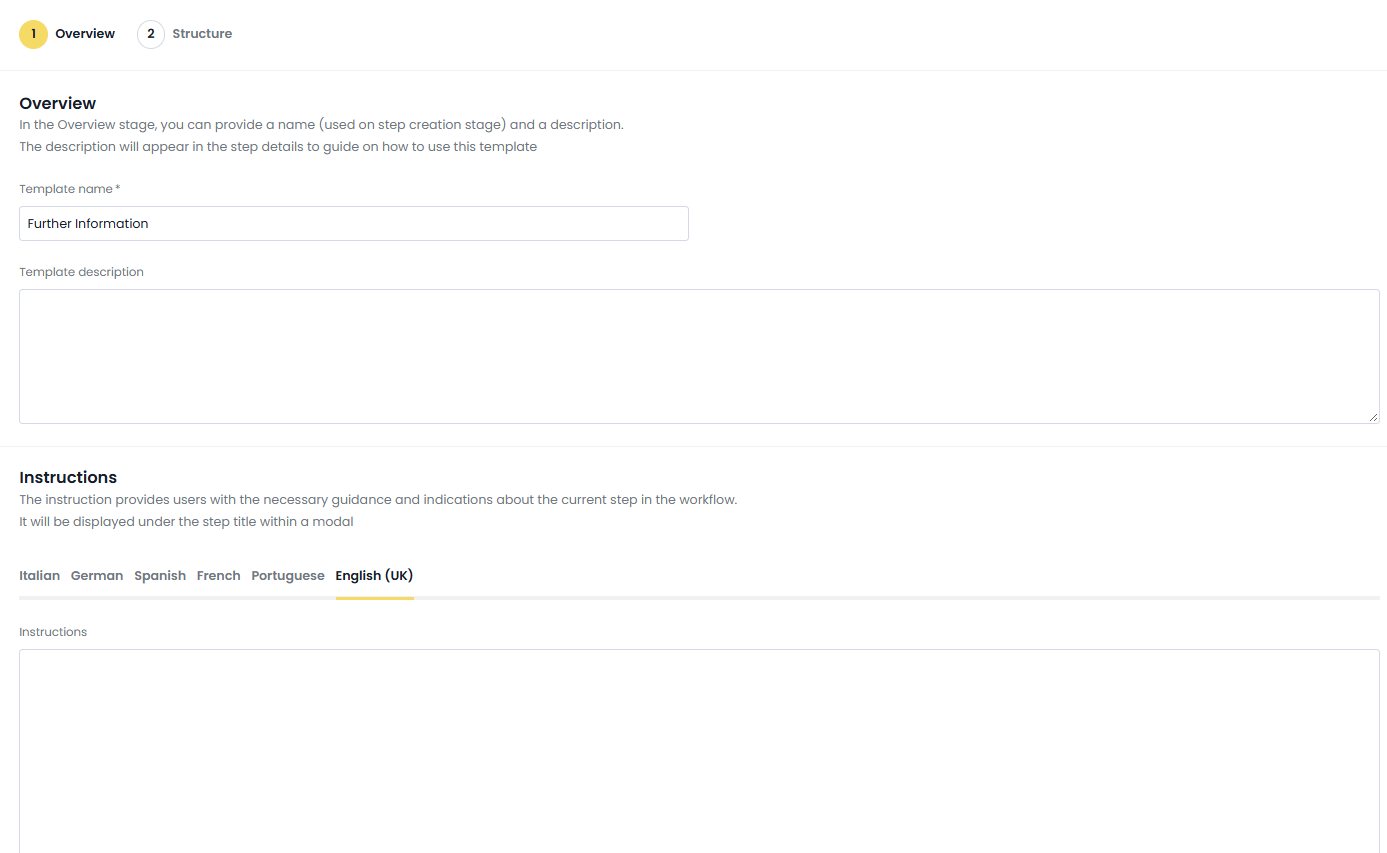
On the left of each element there are icons that allow you to manage the fields within the list.
The first icon allows you to drag and drop the field to change its display order. The second icon
 allows you to lock the change, preventing users who do not have the necessary permissions in their role from making changes; when this limitation is active, the icon is displayed in red
 . Then there is the icon that identifies the type of field, accompanied by the name of the field itself.
Below is a summary of the types of fields associated with the icons to identify them:
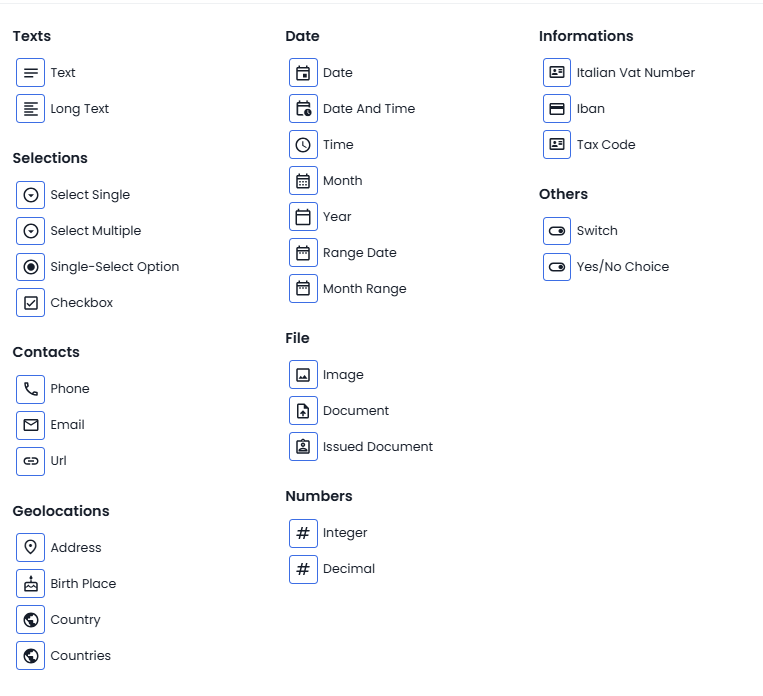
Further settings and actions are available on the right: you can activate or deactivate the field using the appropriate flag , define its mandatory
 nature and access the edit through the icon

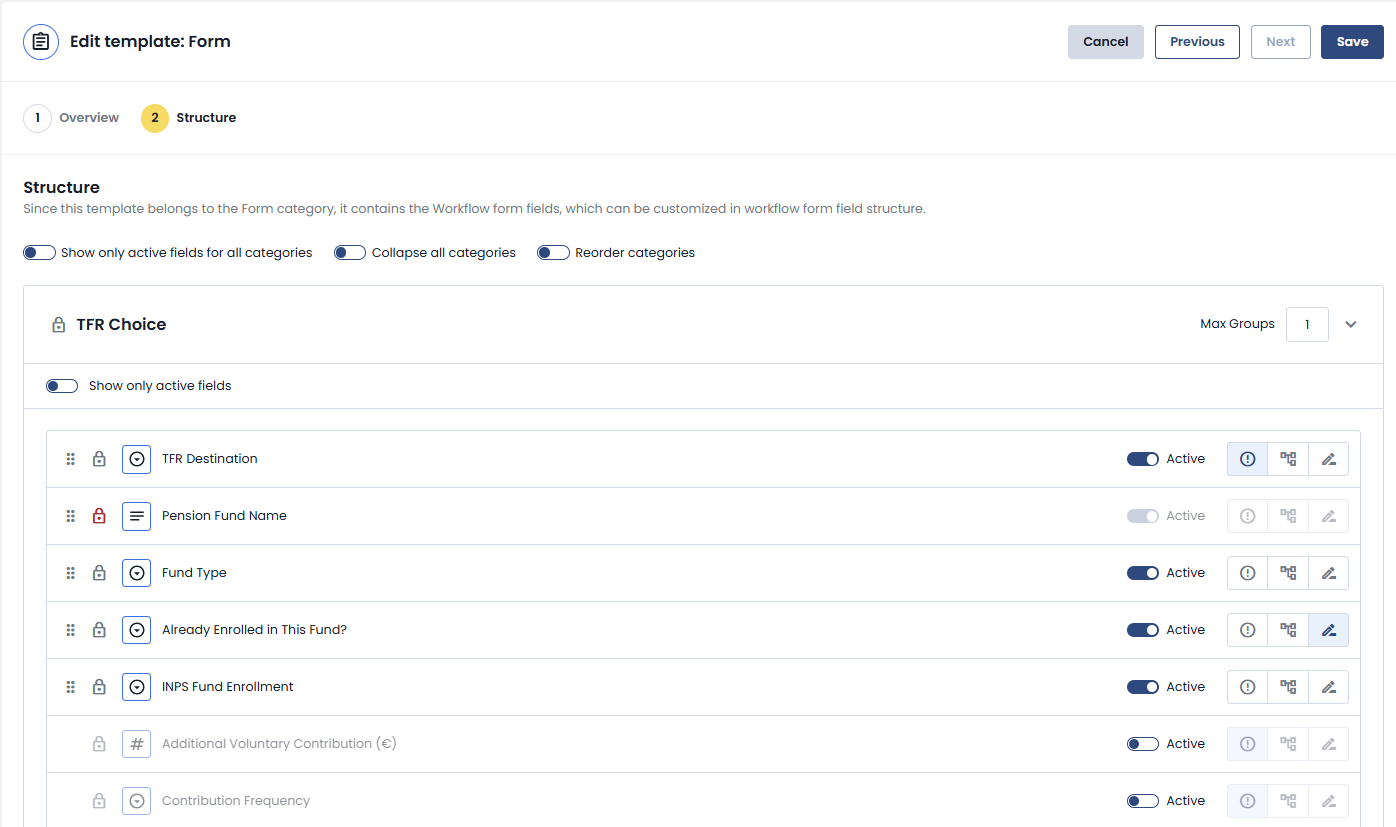
If the step has been used in a workflow, you will not be able to make changes to it.
- Content: As in the first tab above, you will need to specify internal and external titles and descriptions, distinguishing those visible to the person from those inside.
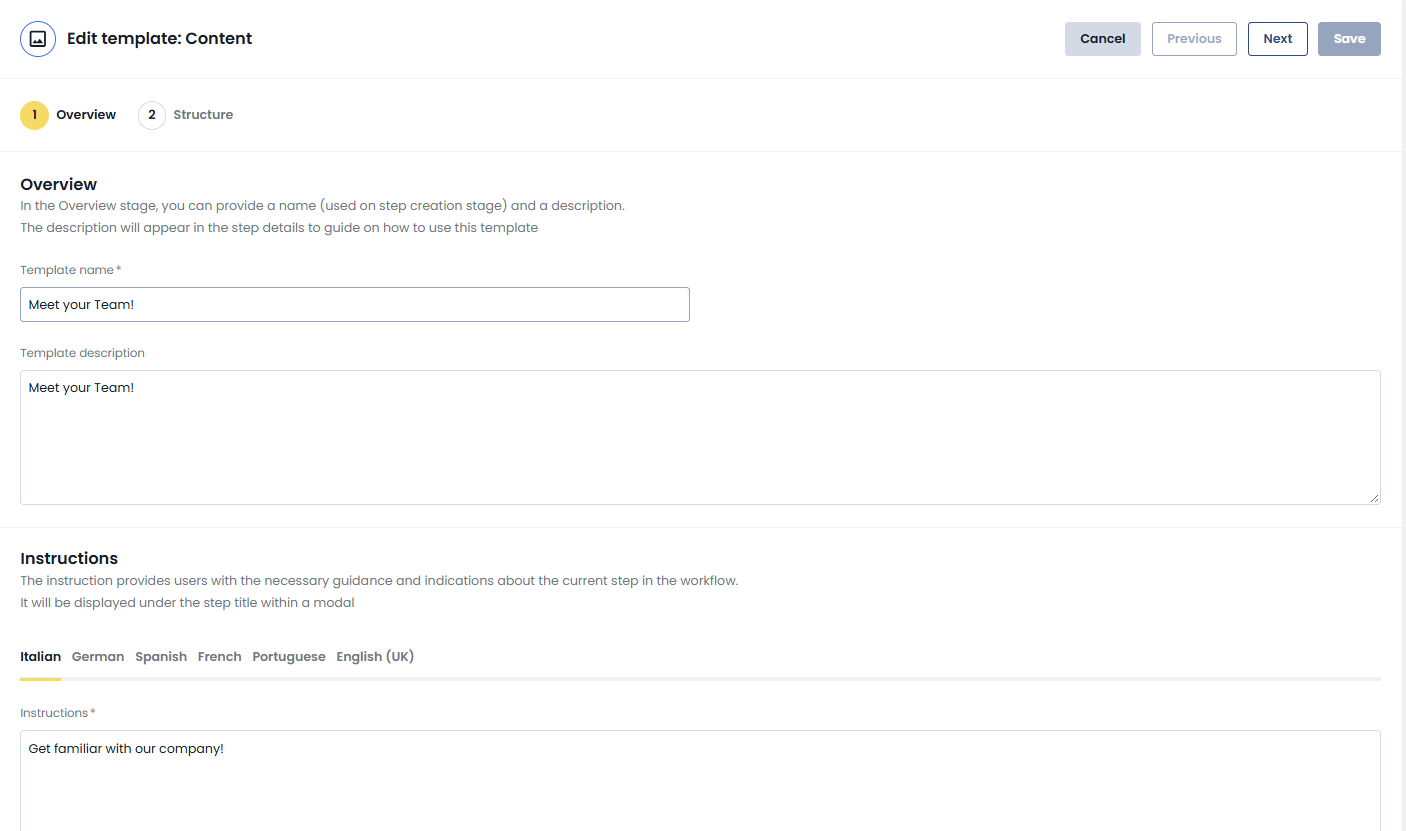
In the second tab, you will be able to add multimedia documents to share with the candidate. You can insert a text to be displayed, or link a video or an image for the candidate to consult it.
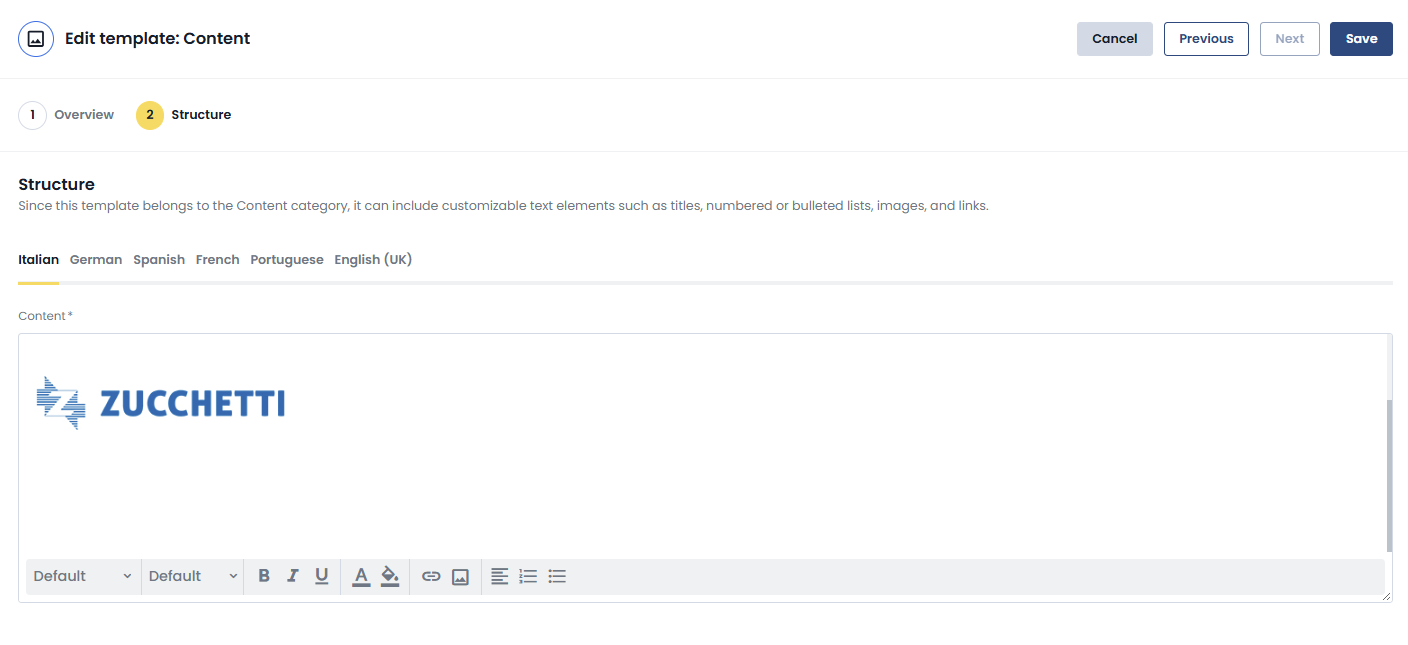 After completing the compilation of the tab, just click on Save at the top right to finalize the operation.
- Document to Sign: also in this case, in the first tab we will indicate the internal and external titles and descriptions.
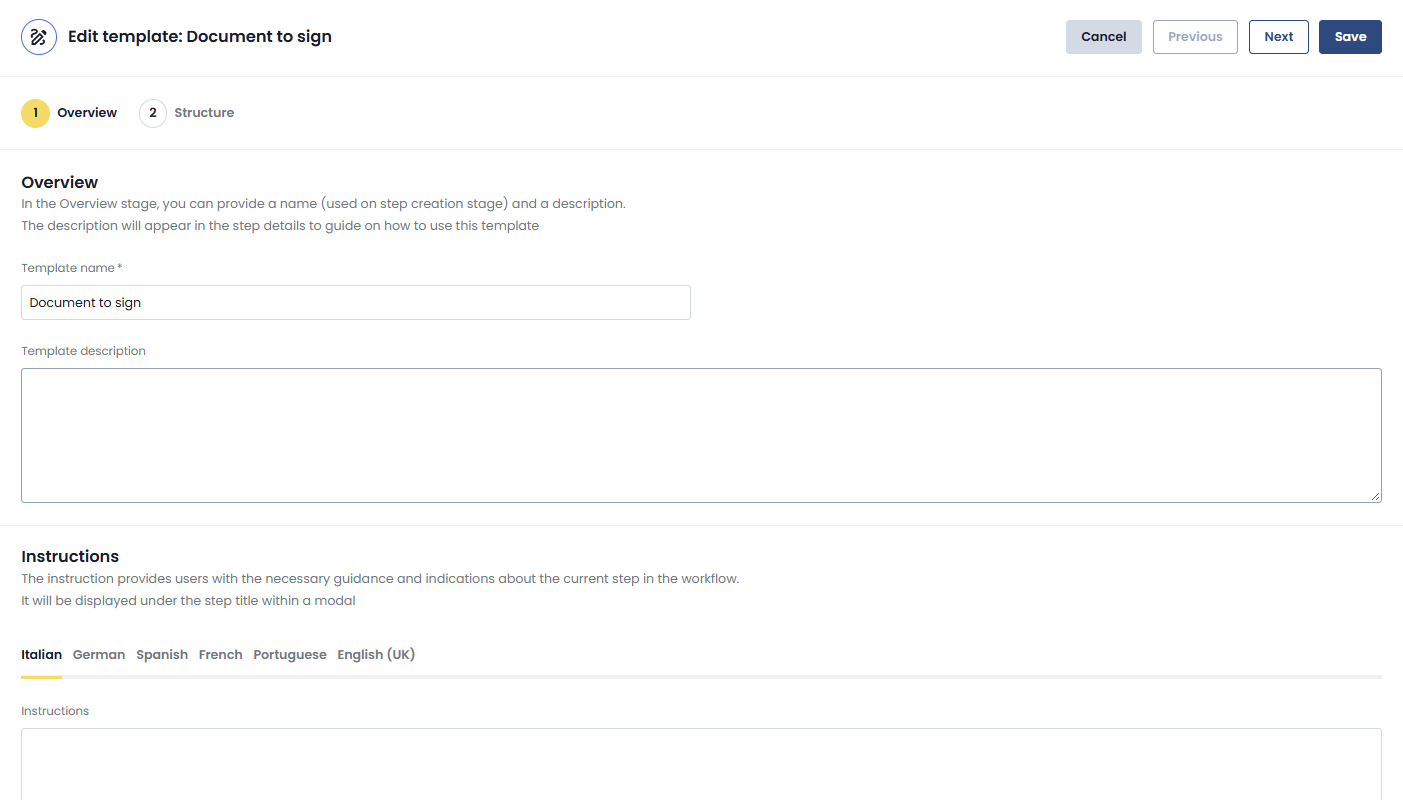 At the bottom there is the section dedicated to instructions: here we can describe the actions that the person will have to carry out in the following steps. It is important to fill in this field in all available languages to ensure that the instructions are always clear and understandable, regardless of the language selected by the person.
In the second Structure tab it will be possible to upload the documents to be signed by the person. Just click Click or drag to upload a file: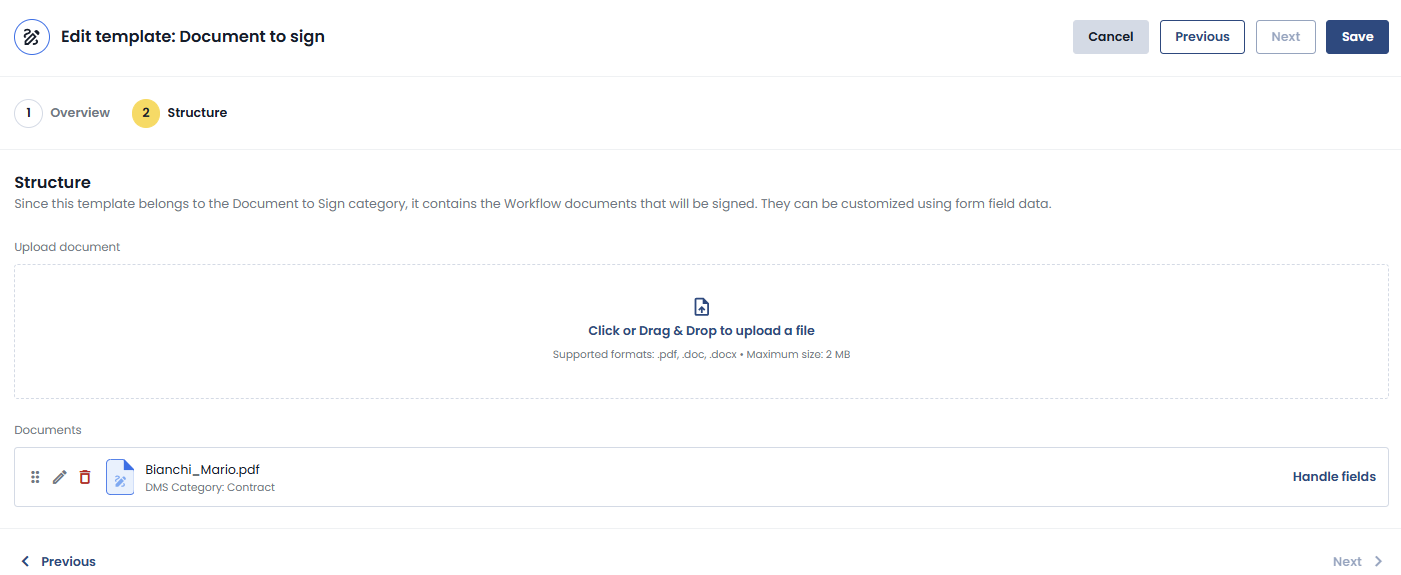 After selecting the file, a pop-up will appear divided into several sections.
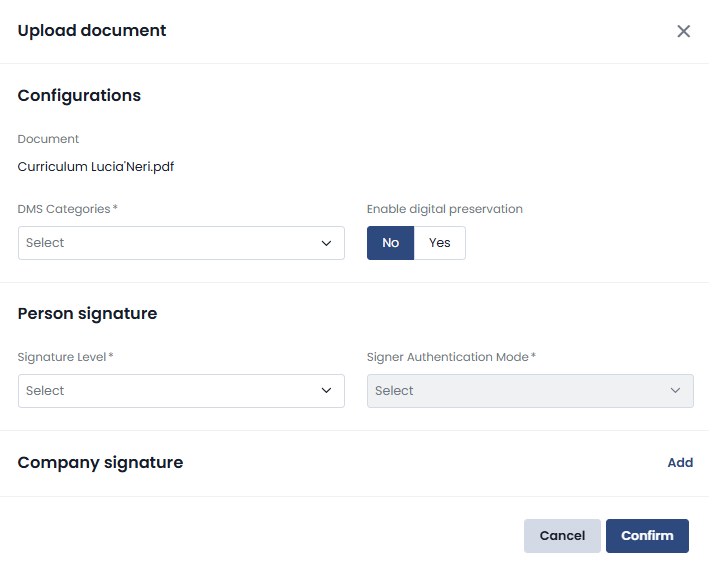 In the Configurations section it is possible to define the name of the document and it will be possible to define the data retention and the level of electronic signature; by means of a special select it is also possible to associate the document with a DMS category among those configured in Settings> DMS Settings > DMS Categories. A flag is then available that allows you to enable the digital preservation of the document.
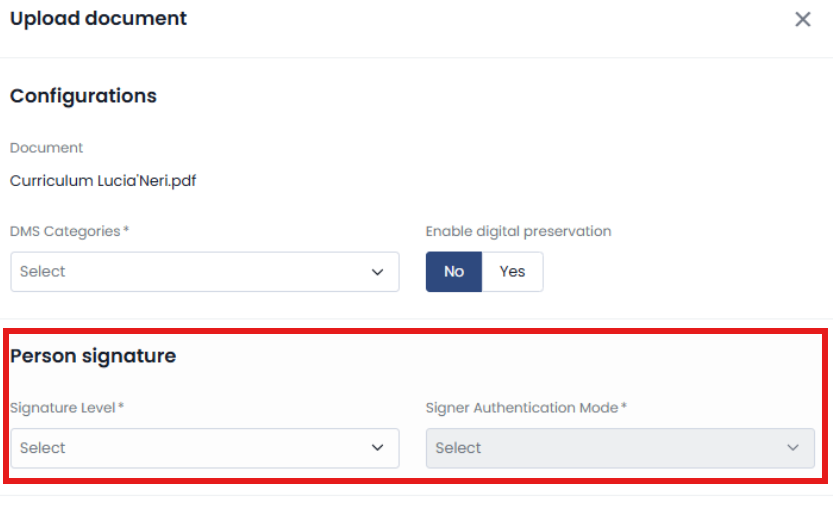
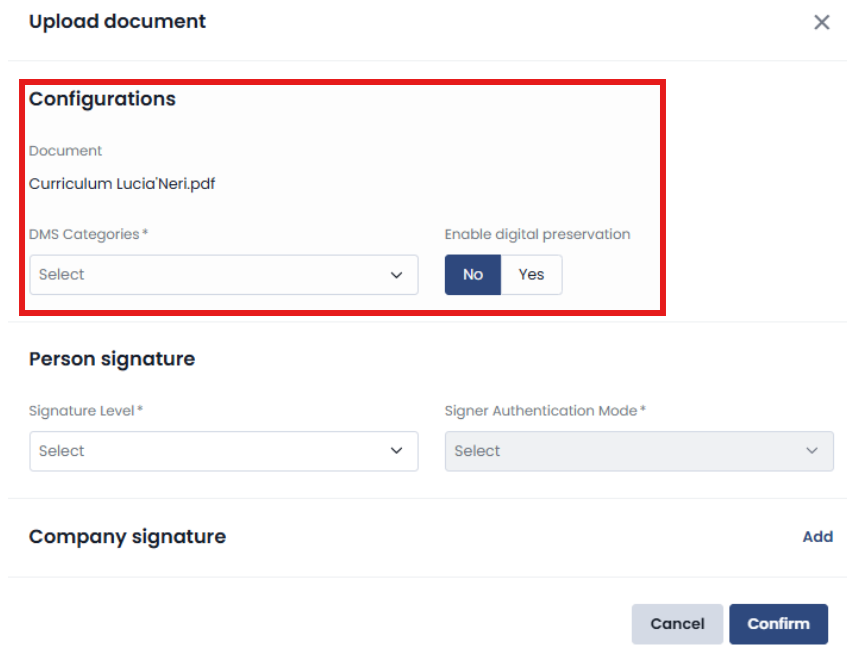 In the section dedicated to the person's signature, it is possible to select the signature level from the drop-down menu, choosing between FES or FEA, and define the authentication method required for the signatory.
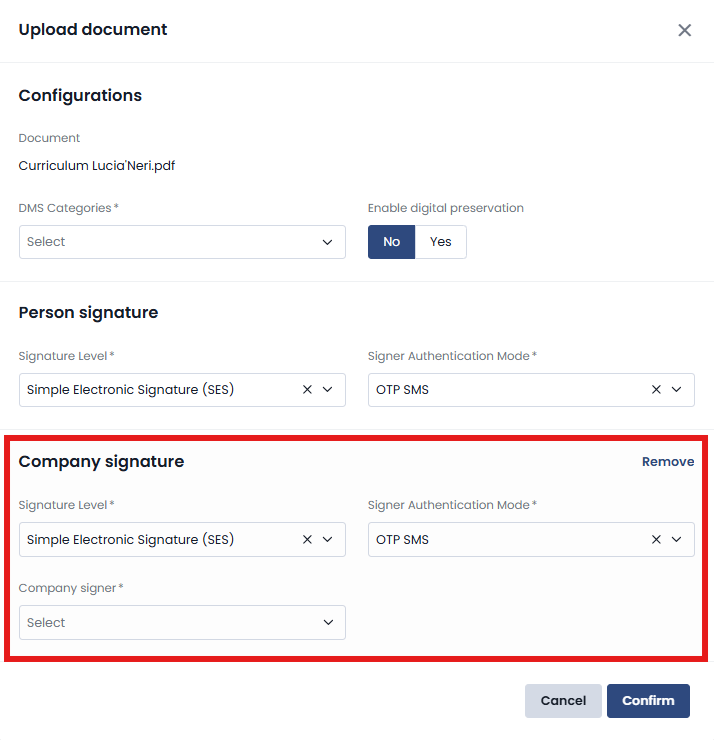
 Finally, it is also possible to enable the company signature: in this case it will be necessary to indicate the signature level (FES or FEA), the authentication mode of the signer and select the company signer.
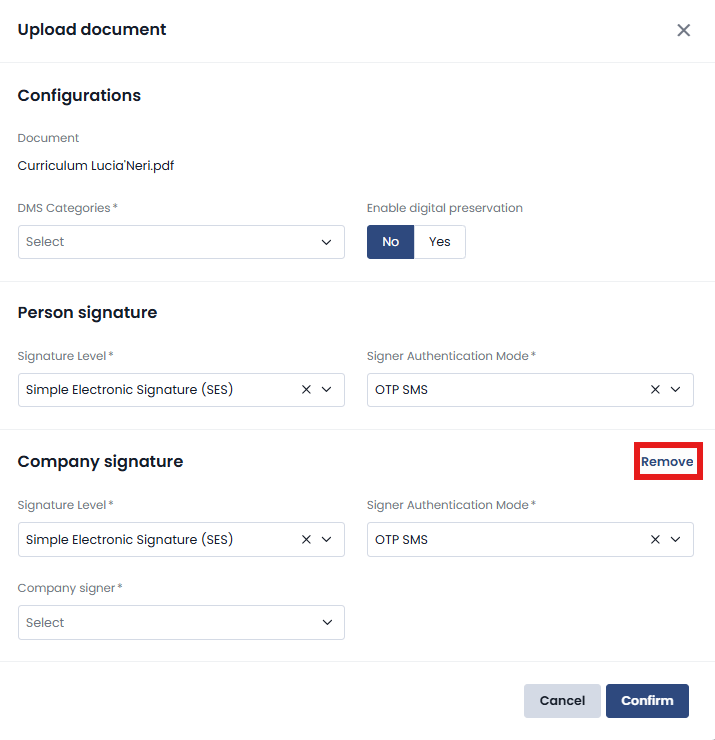
 Through the Remove button, we will have the possibility to delete a company signatory:
 If necessary, we can repeat the operation for other documents.
In the lower part, to the left of each document we will find several icons: the first of them, allows you to drag (drag & drop) the field to change the order of display, it will be possible to access the edit through the icon
 , and finally the deletion through the icon
 ;
On the right, by clicking on Handle fields, it will be possible to drag the fields displayed on the right into the document shown on the left, thus allowing you to complete the empty fields with the information previously entered by the person. Correct placement will ensure accurate and consistent compilation with the data provided.
Similarly, you will need to indicate where the digital signature will be affixed. By dragging the Person Signature field to the desired area of the document, the person, upon clicking, will be automatically redirected to the external service to complete the digital signature.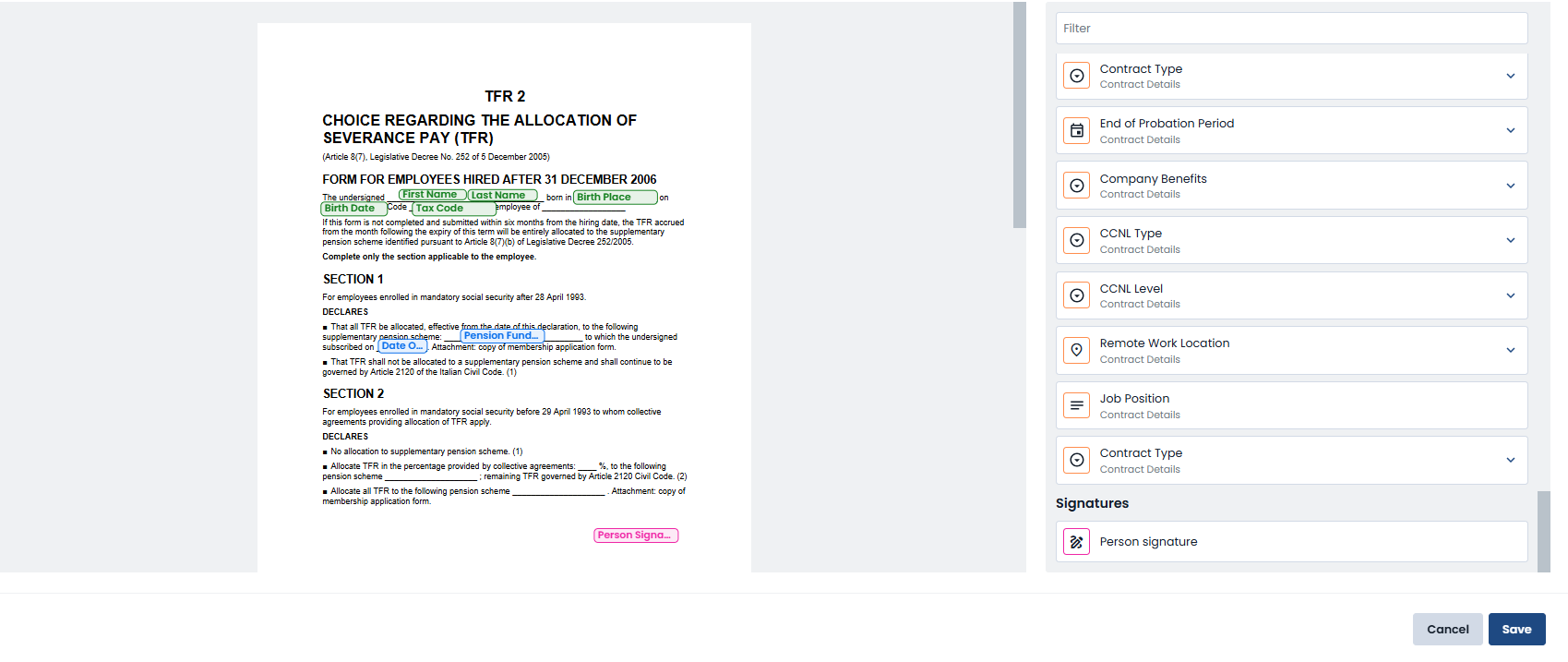 Similarly, you will need to indicate where the digital signature will be affixed. By dragging the Person Signature field to the desired area of the document, the person, upon clicking, will be automatically redirected to the external service to complete the digital signature.
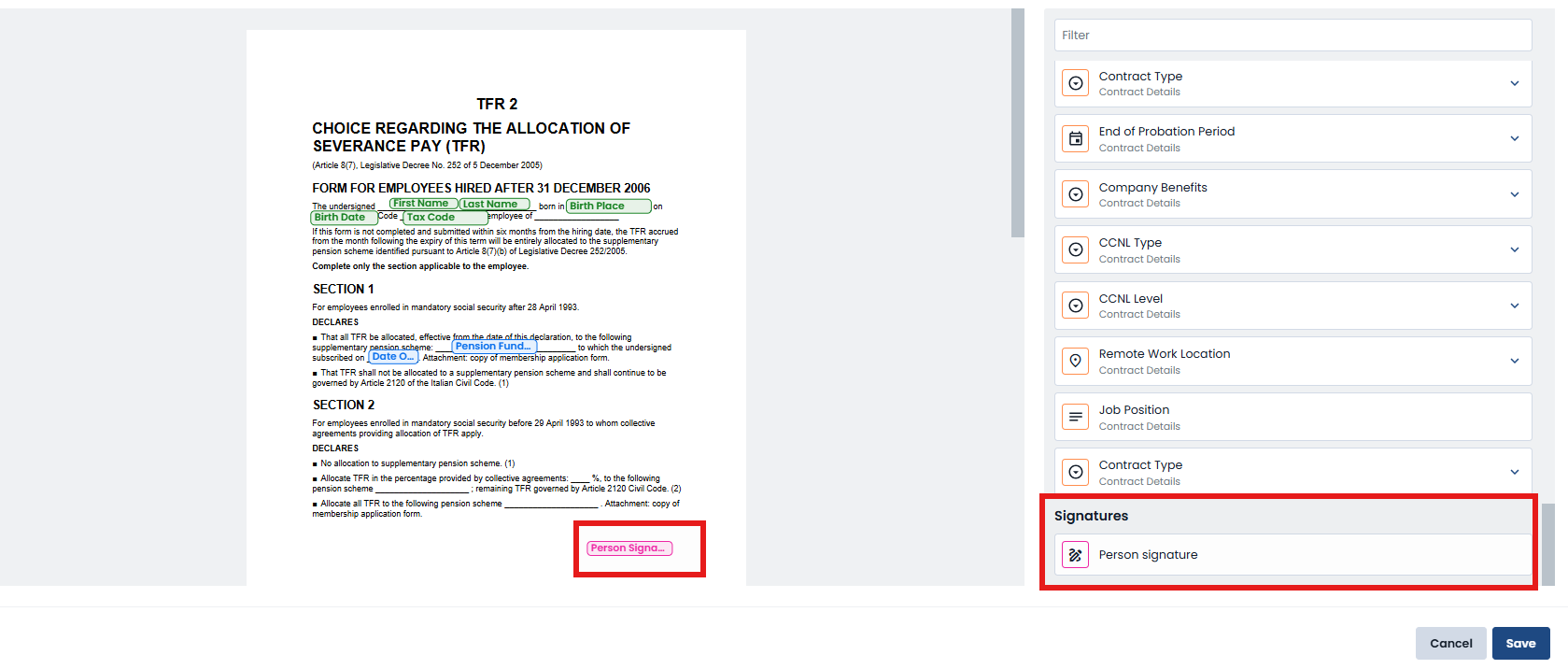
Once this step has been completed, closing using the button at the top right Close, we will have completed our configuration.
In case the document we have uploaded is a Contract, you will need to have created the relevant fields in the Settings > Contracts section > Structure > Contract Field Structure.
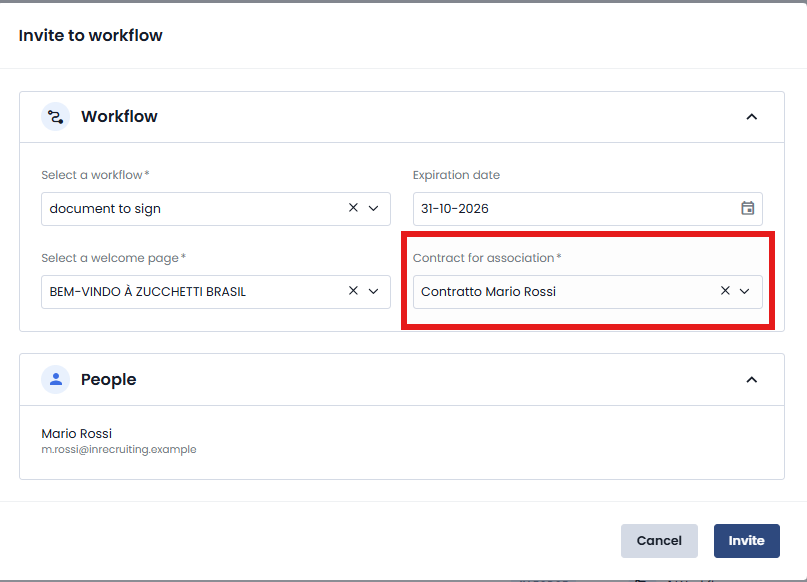
When we invite a person to fill out a workflow that contains a Document to Sign step, it will be necessary to have previously created and configured a Contract.
During the invitation phase, in the dedicated popup you will be asked to select the contract to be associated. Once associated, the document can be automatically filled in using the autocomplete fields, using the information available to the invited user.
- Document to view: This step allows you to show users an information document within the workflow, such as company policies, guidelines or operating instructions.
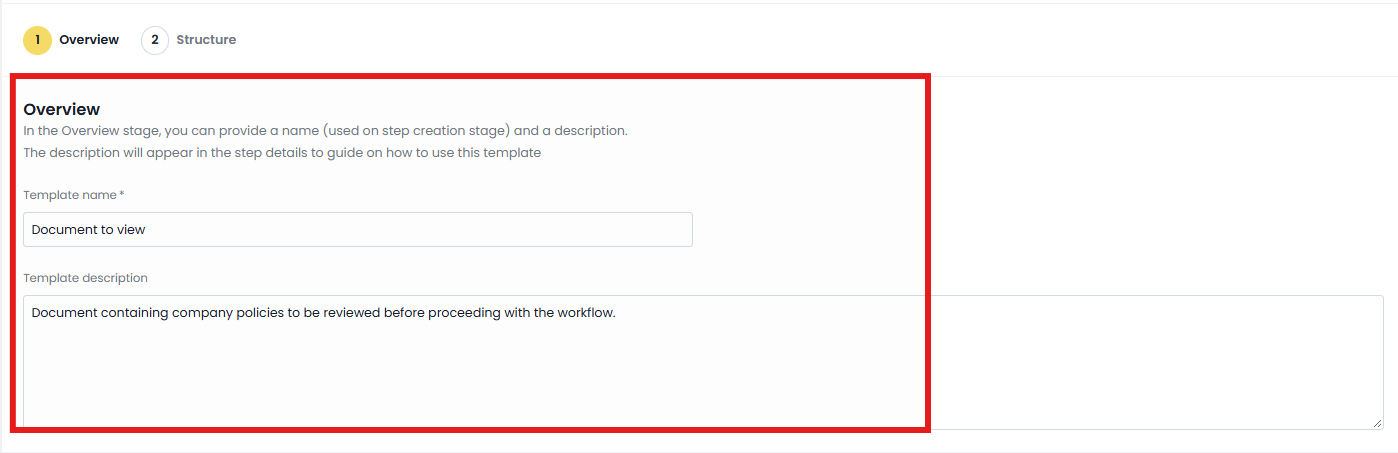
In the Overview section , you can configure: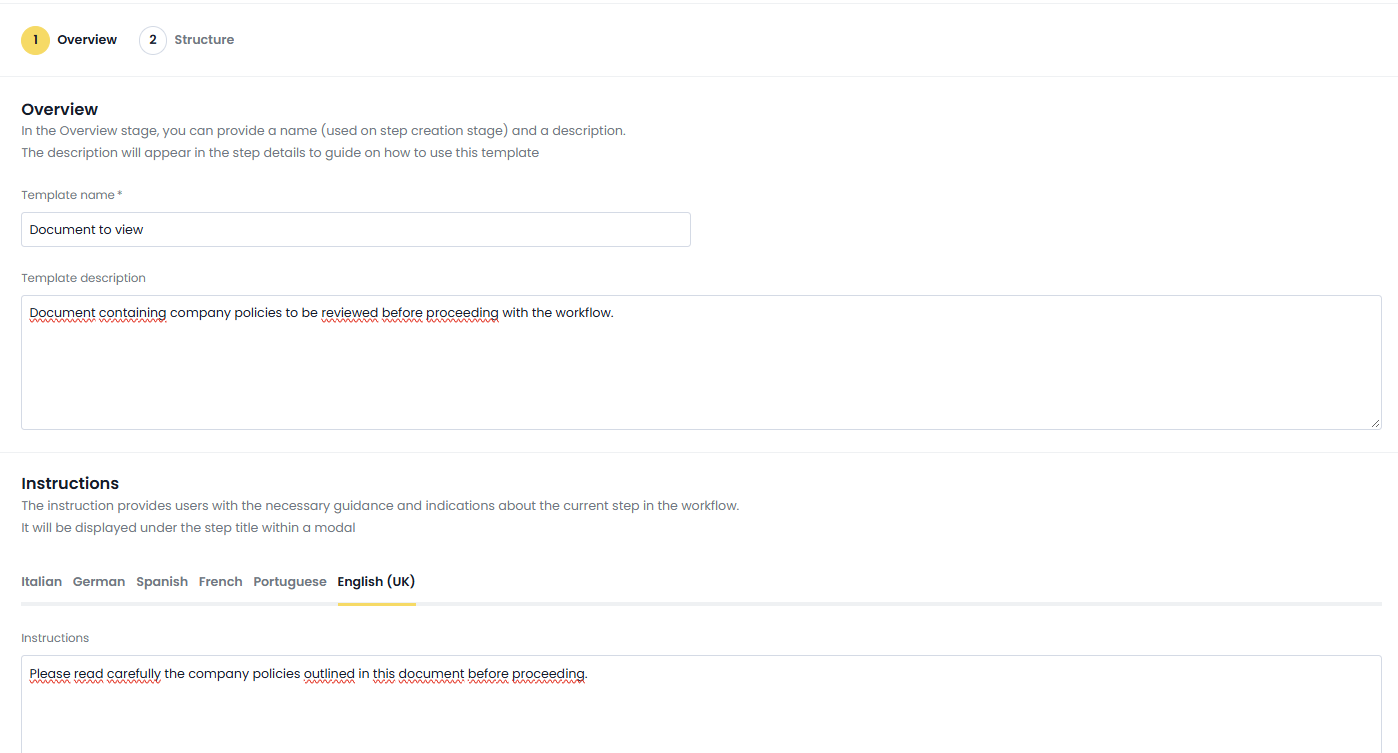
- Template Name: The title of the step, which is visible during the workflow run.
- Template description: A brief explanation of the purpose of the document, useful for contextualizing the content shown
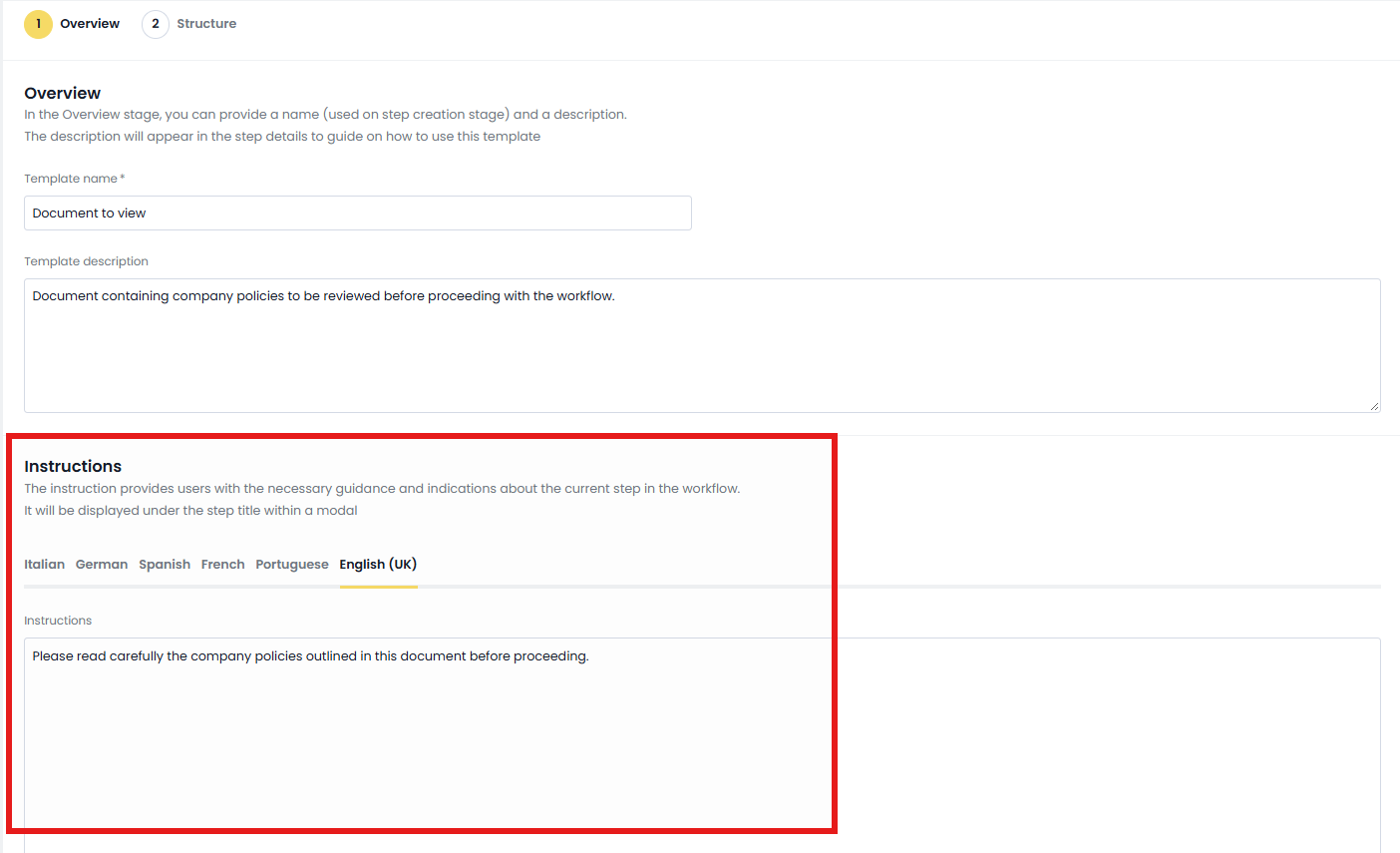
In the Instructions section , you can enter text that will be displayed to the user during the step. The instructions are intended to guide the user in consulting the document, indicating any actions to be taken (for example, read carefully, verify information or contact a contact person in case of doubt).
This type of step is purely informative and is generally used to:
- share mandatory documentation (e.g. company policies, internal regulations)
- provide guidelines before an operational step
- ensure that the user is properly informed before proceeding with the process
In Tab 2 - Structure it will be possible to upload the PDF file to show to the person. Just click on the appropriate box to select it or drag it directly into the loading area.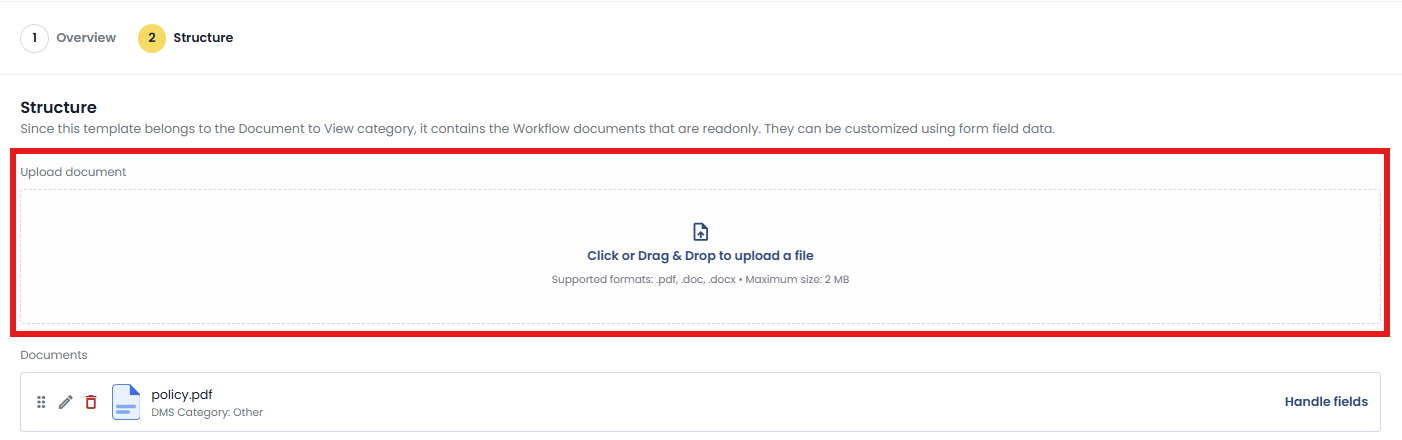 Once the file has been inserted, a pop-up will appear containing the main configurations: the name of the uploaded document, a drop-down menu for selecting the DMS category, configurable in > DMS Settings > DMS Categories; a flag to enable the digital preservation of the document.
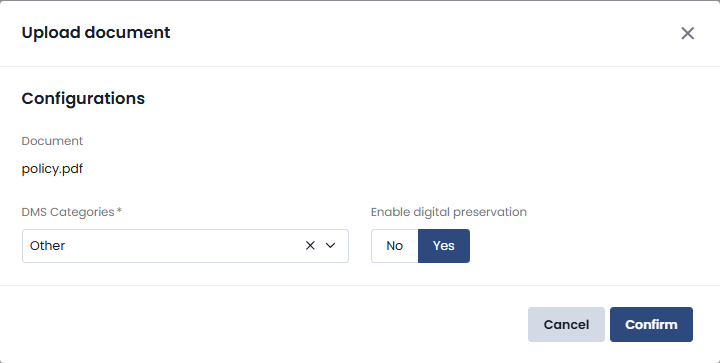 Once you have defined the file configurations, it will be displayed in the section below.
If you want to upload more documents, simply repeat the previous operation: the files will be added and shown in a tabular list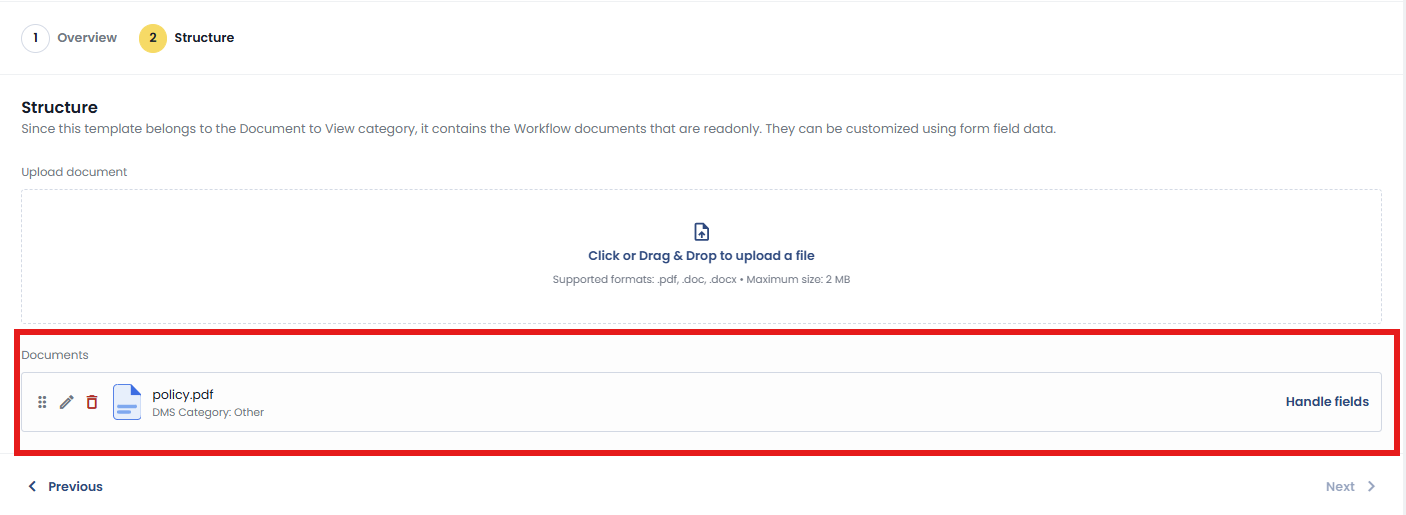
In the lower part, to the left of each document we will find several icons: the first of them, allows you to drag (drag & drop) the field to change the display order, it will be possible to access the editing through the icon
 , and finally to the deletion via the icon
 ;
On the right, by clicking on Manage fields, it will be possible to associate the data to the document: the available fields will be shown on the right side and can be dragged into the document displayed on the left. This will allow you to automatically fill in the blank fields with the information previously entered by the person. Correct placement of fields will ensure accurate and consistent compilation with the data provided.
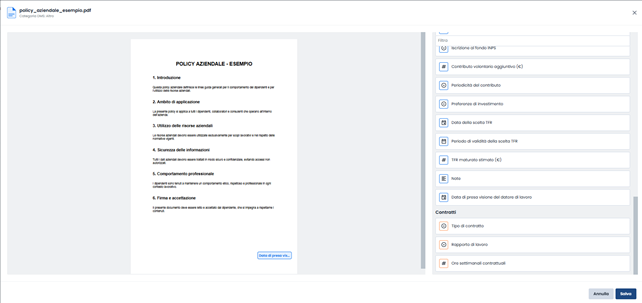
This feature allows you to upload a document template that will be automatically filled in thanks to an intelligent system based on the data entered in the previous fields of the flow.
Was this article helpful?
That’s Great!
Thank you for your feedback
Sorry! We couldn't be helpful
Thank you for your feedback
Feedback sent
We appreciate your effort and will try to fix the article